Milestones That Matter: Speech Development by Age
From Tiny Sounds to Confident Conversations
Every child’s journey begins quietly — with a soft coo, a gentle babble, a smile that responds to your voice. These small sounds are not random; they are the earliest signs of communication, the first buds of language waiting to blossom.
At Sakura Child Therapy in Chennai, we often remind parents that speech development is not a race. Children grow, learn, and express themselves at their own pace. Understanding speech development milestones by age helps families support their child’s growth with confidence, patience, and care — not comparison.
This guide will walk you through typical speech and language milestones, what parents can do at each stage, and when gentle support like speech therapy may help your child bloom beautifully.
Why Speech Development Milestones Matter
Speech and language development is deeply connected to a child’s overall growth. Communication allows children to:
- Express needs, thoughts, and emotions
- Connect with parents, siblings, and peers
- Learn, explore, and problem-solve
- Build confidence and independence
- Prepare for school and social environments
When speech develops smoothly, children feel understood. When challenges arise, frustration can follow. Recognizing milestones early allows parents to offer support at the right time — and early support often leads to the strongest outcomes.
Speech Development Milestones by Age
👶 Birth to 6 Months — The Bud Stage
During the earliest months, babies begin learning how communication works. Even before words appear, infants are actively absorbing language through listening and interaction.
Typical milestones include:
- Cooing and vowel sounds like “ah,” “oo,” and “ee”
- Smiling or quieting when hearing familiar voices
- Turning their head toward sounds
- Crying differently to express hunger, discomfort, or tiredness
🌸 How parents can help:
- Talk to your baby throughout the day
- Sing lullabies and simple songs
- Respond to sounds as if having a conversation
Your baby learns that sounds have meaning — and that their voice matters.
👶 6 to 12 Months — Sounds Begin to Bloom
Babbling becomes more varied and intentional as babies experiment with sounds.
Typical milestones include:
- Babbling consonant-vowel combinations (“ba-ba,” “da-da”)
- Responding to their name
- Understanding familiar words like “no,” “bye,” or “milk”
- Using gestures such as pointing, waving, or reaching
🌼 Support at home:
- Label objects during daily routines
- Imitate your baby’s sounds and add simple words
- Read picture books and name what you see
These early interactions help babies connect sounds with meaning.
🌷 Parent tip:
Describe everyday activities aloud — “We’re putting on shoes,” “Let’s eat fruit.” This constant exposure builds understanding long before speaking begins.
👧 12 to 18 Months — First Words Appear
This stage marks a major milestone — children begin using words to communicate meaningfully.
Typical milestones include:
- Saying first meaningful words (mama, dada, ball)
- Using 5–20 words consistently
- Following simple instructions like “come here”
- Pointing to objects or pictures when named
🚩 Consider guidance if:
Your child is not using words or gestures by 15–18 months.
Early speech therapy can gently support language development during this important phase.
👧 18 to 24 Months — Words Grow Into Meaning
Language grows rapidly during this phase as children begin combining words.
Typical milestones include:
- Vocabulary expanding to 50 words or more
- Combining two words (“more milk,” “mama come”)
- Naming familiar people, objects, and actions
- Understanding simple questions and directions
🌸 Parents may notice:
Children become less frustrated as their ability to communicate improves.
🧒 2 to 3 Years — Little Conversations Begin
Speech becomes more purposeful and expressive, and children start engaging socially through language.
Typical milestones include:
- Speaking in short sentences (2–3 words)
- Asking basic questions (“what’s that?”)
- Following two-step instructions
- Being understood by familiar adults
🚩 Red flags:
- Very limited speech
- Speech that is difficult to understand
- Frequent frustration during communication
A speech therapy assessment can provide clarity and reassurance.
🧒 3 to 4 Years — Confidence Starts to Bloom
Children become more confident communicators and enjoy expressing ideas.
Typical milestones include:
- Speaking in full sentences
- Asking “why,” “where,” and “how” questions
- Being understood by most people
- Engaging in conversations
Speech now supports social bonding and emotional expression.
🌸 Support tip:
Encourage storytelling, role-play, and open-ended questions to build expressive language.
🌈 4 to 5 Years — Ready for the World
Speech and language skills support school readiness, friendships, and emotional expression.
Typical milestones include:
- Clear pronunciation of most sounds
- Telling stories with a beginning and end
- Understanding rules, instructions, and routines
- Expressing feelings, ideas, and imagination
At this stage, speech becomes a powerful tool for learning and confidence.
When Should Parents Consider Speech Therapy?
You may consider speech therapy in Chennai if your child:
- Talks less than peers of the same age
- Has unclear or hard-to-understand speech
- Struggles to follow instructions
- Stutters or repeats sounds
- Shows frustration during communication
- Has autism or developmental delays
Remember — seeking support is not a sign of failure. It’s a sign of love.
How Speech Therapy Helps Children Blossom
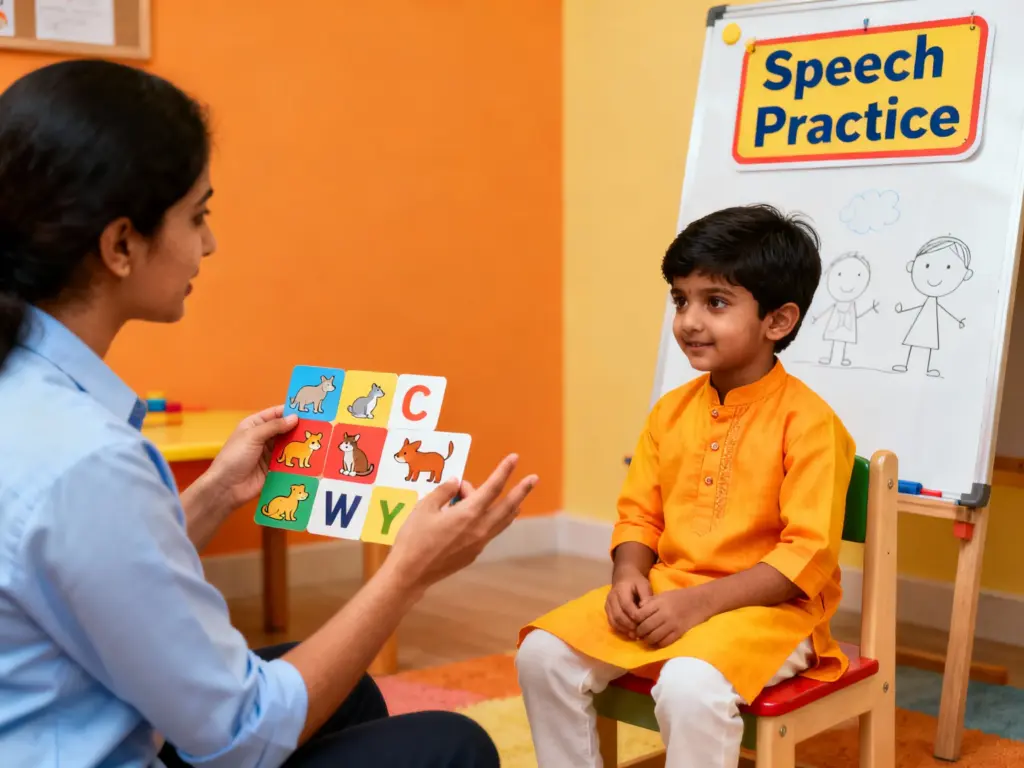
At Sakura Child Therapy, our pediatric speech therapy programs focus on:
- Play-based, child-centered sessions
- Improving speech clarity and articulation
- Supporting language development
- Enhancing social communication
- Guiding parents with simple home strategies
We believe therapy should feel encouraging, joyful, and safe.
A Gentle Reminder for Parents
Milestones are guides, not deadlines.
Every child blossoms in their own season.
If your heart feels unsure, trust that instinct. A conversation with a professional can bring clarity, comfort, and direction.